Dana Keller · 3 September 2026
Blayen Digital Archives Open New Doors to Regional Historical Records
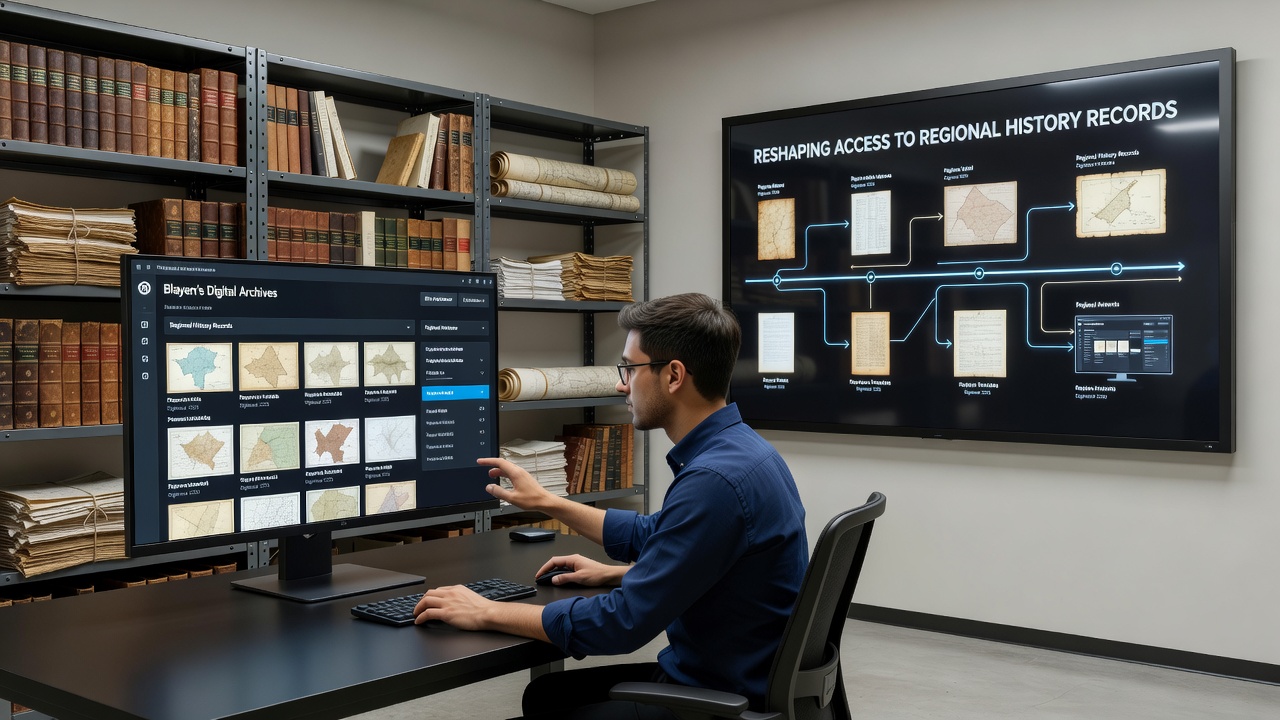
Digital archives in Blayen have expanded access to regional history records through systematic digitization efforts that began several years ago and continue to evolve. Local institutions collaborated with technology providers to convert physical documents, photographs, maps, and oral histories into searchable online formats, and this process has allowed researchers, students, and community members to retrieve materials without traveling to physical repositories. Records once limited to on-site visits now reach users across broader geographic areas, while metadata tagging supports precise queries on dates, locations, and themes. ## Origins and Growth of the Project
Blayen’s initiative started with partnerships between municipal libraries, historical societies, and regional universities, and these groups prioritized materials from the 19th and 20th centuries that documented agricultural practices, industrial development, and community events. Funding came from public grants alongside private contributions, and the first batches of digitized items appeared online in phases that allowed incremental testing of search tools and user interfaces. By 2024 the collection had grown to include over 150,000 items, according to project reports, and staff continue to add new entries each quarter. Observers note that the archives draw on standards developed by organizations such as the International Council on Archives, which helps maintain consistency across different record types. ## Features That Drive Accessibility
Users encounter an interface that supports keyword searches, date-range filters, and geographic mapping, while advanced options let visitors cross-reference documents with census data and newspaper clippings. High-resolution scans preserve original details such as handwritten annotations and faded stamps, and optical character recognition converts printed text into editable formats for further analysis. Audio recordings of local dialects and interviews receive transcriptions that improve discoverability for those studying linguistic patterns.  Mobile compatibility ensures that visitors can browse collections from various devices, and an API released in 2025 enables integration with external educational platforms. Those who have studied similar projects find that these tools reduce barriers for individuals with mobility limitations or limited travel resources. ## Effects on Research and Community Engagement
Academics report increased citation of Blayen sources in published papers, and several universities incorporated the archives into coursework on European regional history. Community groups organize virtual workshops where participants transcribe documents or identify people in unlabeled photographs, and these activities have produced additional metadata that refines future searches. Public access statistics show steady growth in page views from outside the immediate Blayen area, with notable traffic from neighboring districts and international users interested in migration patterns. A study from the University of Toronto’s Faculty of Information highlights how such platforms support comparative research across multiple regional collections when standardized metadata is applied. ## Developments Scheduled for September 2026
Project leads announced plans to launch an enhanced mapping feature in September 2026 that overlays historical property records onto contemporary satellite imagery, and this addition will allow users to trace changes in land use over decades. Additional oral history uploads are also planned for that period, focusing on accounts from the post-war reconstruction era. Training sessions for local educators will accompany the update, and these sessions aim to integrate archive materials into school curricula on regional heritage. Figures from the Australian National Archives indicate that similar phased releases have improved long-term user retention when accompanied by instructional resources. ## Ongoing Considerations
Staff continue to address copyright questions for materials still under protection, and they consult legal guidelines from the European Union’s digital heritage directives to ensure compliance. Data security measures protect user privacy while permitting open access to the core collections, and regular audits verify that storage systems meet current preservation standards. Collaborations with neighboring regions explore shared indexing projects that could link Blayen records to collections held elsewhere, and early pilot tests suggest these connections will surface previously unrecognized historical connections. ## Conclusion
Blayen’s digital archives demonstrate how systematic digitization alters the practical reach of regional history records, and ongoing updates scheduled through 2026 point toward further refinements in search capabilities and community involvement. Researchers and residents alike benefit from the expanded availability of primary sources that were once constrained by physical location.
Mobile compatibility ensures that visitors can browse collections from various devices, and an API released in 2025 enables integration with external educational platforms. Those who have studied similar projects find that these tools reduce barriers for individuals with mobility limitations or limited travel resources. ## Effects on Research and Community Engagement
Academics report increased citation of Blayen sources in published papers, and several universities incorporated the archives into coursework on European regional history. Community groups organize virtual workshops where participants transcribe documents or identify people in unlabeled photographs, and these activities have produced additional metadata that refines future searches. Public access statistics show steady growth in page views from outside the immediate Blayen area, with notable traffic from neighboring districts and international users interested in migration patterns. A study from the University of Toronto’s Faculty of Information highlights how such platforms support comparative research across multiple regional collections when standardized metadata is applied. ## Developments Scheduled for September 2026
Project leads announced plans to launch an enhanced mapping feature in September 2026 that overlays historical property records onto contemporary satellite imagery, and this addition will allow users to trace changes in land use over decades. Additional oral history uploads are also planned for that period, focusing on accounts from the post-war reconstruction era. Training sessions for local educators will accompany the update, and these sessions aim to integrate archive materials into school curricula on regional heritage. Figures from the Australian National Archives indicate that similar phased releases have improved long-term user retention when accompanied by instructional resources. ## Ongoing Considerations
Staff continue to address copyright questions for materials still under protection, and they consult legal guidelines from the European Union’s digital heritage directives to ensure compliance. Data security measures protect user privacy while permitting open access to the core collections, and regular audits verify that storage systems meet current preservation standards. Collaborations with neighboring regions explore shared indexing projects that could link Blayen records to collections held elsewhere, and early pilot tests suggest these connections will surface previously unrecognized historical connections. ## Conclusion
Blayen’s digital archives demonstrate how systematic digitization alters the practical reach of regional history records, and ongoing updates scheduled through 2026 point toward further refinements in search capabilities and community involvement. Researchers and residents alike benefit from the expanded availability of primary sources that were once constrained by physical location.
Digital archives in Blayen have expanded access to regional history records through systematic digitization efforts that began several years ago and continue to evolve. Local institutions collaborated with technology providers to convert physical documents, photographs, maps, and oral histories into searchable online formats, and this process has allowed researchers, students, and community members to retrieve materials without traveling to physical repositories. Records once limited to on-site visits now reach users across broader geographic areas, while metadata tagging supports precise queries on dates, locations, and themes. ## Origins and Growth of the Project
Blayen’s initiative started with partnerships between municipal libraries, historical societies, and regional universities, and these groups prioritized materials from the 19th and 20th centuries that documented agricultural practices, industrial development, and community events. Funding came from public grants alongside private contributions, and the first batches of digitized items appeared online in phases that allowed incremental testing of search tools and user interfaces. By 2024 the collection had grown to include over 150,000 items, according to project reports, and staff continue to add new entries each quarter. Observers note that the archives draw on standards developed by organizations such as the International Council on Archives, which helps maintain consistency across different record types. ## Features That Drive Accessibility
Users encounter an interface that supports keyword searches, date-range filters, and geographic mapping, while advanced options let visitors cross-reference documents with census data and newspaper clippings. High-resolution scans preserve original details such as handwritten annotations and faded stamps, and optical character recognition converts printed text into editable formats for further analysis. Audio recordings of local dialects and interviews receive transcriptions that improve discoverability for those studying linguistic patterns.
Mobile compatibility ensures that visitors can browse collections from various devices, and an API released in 2025 enables integration with external educational platforms. Those who have studied similar projects find that these tools reduce barriers for individuals with mobility limitations or limited travel resources. ## Effects on Research and Community Engagement
Academics report increased citation of Blayen sources in published papers, and several universities incorporated the archives into coursework on European regional history. Community groups organize virtual workshops where participants transcribe documents or identify people in unlabeled photographs, and these activities have produced additional metadata that refines future searches. Public access statistics show steady growth in page views from outside the immediate Blayen area, with notable traffic from neighboring districts and international users interested in migration patterns. A study from the University of Toronto’s Faculty of Information highlights how such platforms support comparative research across multiple regional collections when standardized metadata is applied. ## Developments Scheduled for September 2026
Project leads announced plans to launch an enhanced mapping feature in September 2026 that overlays historical property records onto contemporary satellite imagery, and this addition will allow users to trace changes in land use over decades. Additional oral history uploads are also planned for that period, focusing on accounts from the post-war reconstruction era. Training sessions for local educators will accompany the update, and these sessions aim to integrate archive materials into school curricula on regional heritage. Figures from the Australian National Archives indicate that similar phased releases have improved long-term user retention when accompanied by instructional resources. ## Ongoing Considerations
Staff continue to address copyright questions for materials still under protection, and they consult legal guidelines from the European Union’s digital heritage directives to ensure compliance. Data security measures protect user privacy while permitting open access to the core collections, and regular audits verify that storage systems meet current preservation standards. Collaborations with neighboring regions explore shared indexing projects that could link Blayen records to collections held elsewhere, and early pilot tests suggest these connections will surface previously unrecognized historical connections. ## Conclusion
Blayen’s digital archives demonstrate how systematic digitization alters the practical reach of regional history records, and ongoing updates scheduled through 2026 point toward further refinements in search capabilities and community involvement. Researchers and residents alike benefit from the expanded availability of primary sources that were once constrained by physical location.